
When planning Bathroom Renovations, one of the more visually striking decisions often comes down to the bath itself. Freestanding Baths have become increasingly popular in recent years, often associated with luxury hotel-style interiors and spacious bathroom designs. However, built-in baths remain a practical and widely used option in many UK homes.
Both styles have their strengths, and neither is universally “better” than the other. The right choice tends to depend on space, lifestyle, budget and the overall design direction of the bathroom. Below, we look at the pros and cons of Freestanding Baths compared with built-in alternatives to help you decide what may work best for your home.
What are Freestanding Baths?
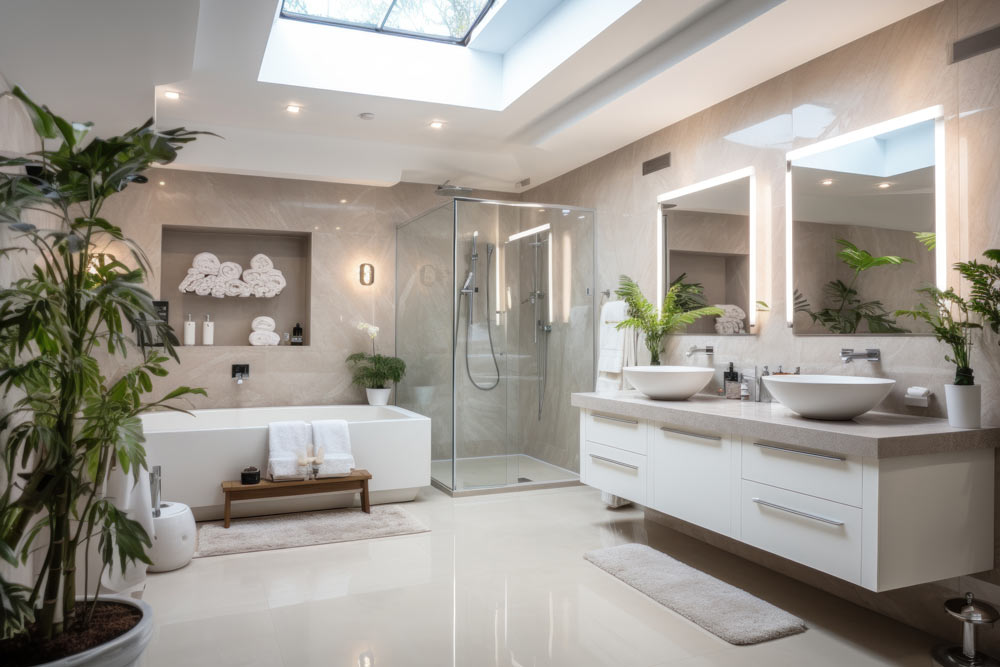
Freestanding Baths are exactly what the name suggests: baths that are not enclosed by walls or panels. They stand independently within the bathroom space and are often positioned as a focal point. Designs range from traditional roll-top styles to ultra-modern sculptural forms.
Because they are visible from all angles, they tend to be chosen for their aesthetic impact as much as their practicality. In many Bathroom Renovations, they are used to create a sense of openness and visual luxury.
Advantages of Freestanding Baths
1. Strong visual impact
One of the main reasons homeowners choose Freestanding Baths is their appearance. They often become the centrepiece of the room, giving a bathroom a more considered, design-led feel. Even a relatively simple space can feel more elevated with the right bath installed.
2. Flexible placement
Unlike built-in options, Freestanding Baths do not need to sit against a wall. This allows more flexibility in layout, particularly in larger bathrooms. Positioning the bath under a window or in the centre of the room can create a more spacious, balanced design.
3. Variety of styles
There is a wide range of Freestanding Baths available, from traditional Victorian-inspired models to minimalist contemporary shapes. This makes them suitable for both modern and classic interiors, depending on the finish and surrounding design choices.
4. Easier to replace in theory
In some cases, replacing a freestanding unit can be more straightforward than removing a built-in structure. However, this depends heavily on plumbing layout and flooring, so it is not always a simple swap.
Disadvantages of Freestanding Baths
1. Space requirements
Freestanding Baths generally require more floor space around them to look balanced. In smaller bathrooms, they can feel visually dominant or impractical. Without enough clearance, the design can quickly feel cramped rather than luxurious.
2. Cleaning considerations
Because all sides are exposed, cleaning around Freestanding Baths can take more effort. Dust and water can collect underneath and around the edges, meaning access all the way around the unit is important.
3. Installation complexity
Plumbing for Freestanding Baths can sometimes be more complex, particularly if pipework needs to be routed through the floor. This can increase installation time and cost within Bathroom Renovations.
4. Less storage integration
Built-in baths often include surrounding panels that can be used for storage ledges or tiled shelving. Freestanding Baths do not offer this built-in functionality, which may be a drawback in smaller or family bathrooms.
What are Built-In Baths?
Built-in baths are installed against a wall and are usually surrounded by panels or tiled enclosures. They are the most common type of bath in UK homes and are widely used in both new builds and Bathroom Renovations.
They prioritise practicality and space efficiency, often combining bathing and showering functions in one area.
Advantages of Built-In Baths
1. Space efficiency
Built-in baths are generally better suited to smaller bathrooms. By sitting flush against a wall, they make more efficient use of available space and leave more open floor area.
2. Practical for families
Many households prefer built-in baths because they are easier to combine with shower screens, making them ideal for family use. They also tend to be more forgiving in everyday use.
3. Easier maintenance around the edges
Because three sides are enclosed, cleaning is often simpler compared to Freestanding Baths. There are fewer exposed surfaces to maintain.
4. More integrated storage options
The surrounding structure can be used for tiled shelving, bath panels with access, or even built-in niches. This can be useful in bathrooms where storage is limited.
Disadvantages of Built-In Baths
1. Less visual impact
While practical, built-in baths are generally less visually striking than Freestanding Baths. They tend to blend into the room rather than act as a focal point.
2. More rigid layout
Once installed, built-in baths are harder to reposition without significant disruption. The layout becomes more fixed compared to freestanding alternatives.
3. Can feel more standard
In some Bathroom Renovations, built-in baths can feel functional rather than design-led. This isn’t necessarily a negative, but it may not suit more luxury-focused interiors.
Which option is best for your bathroom?
Choosing between Freestanding Baths and built-in options depends on a few key factors.
If you have a larger bathroom and want a strong design feature, Freestanding Baths often create a more impactful result. They suit open layouts and spaces where aesthetics are a priority.
On the other hand, if practicality, storage and space efficiency are more important, a built-in bath may be the better option. This is especially true in family bathrooms or smaller properties where every centimetre matters.
In many Bathroom Renovations, the decision is less about what is “better” and more about what fits the space and how it will actually be used day to day.
Cost considerations
Freestanding Baths can sometimes be more expensive depending on the model chosen, although this is not always the case. Installation costs may also vary depending on plumbing requirements and floor structure.
Built-in baths tend to be more straightforward to install, which can make them a more budget-friendly option overall. However, high-end fitted designs can still reach similar price levels depending on materials and finishes.
Final thoughts
Both Freestanding Baths and built-in baths have clear advantages, and both can work beautifully within well-designed Bathroom Renovations. Freestanding Baths tend to focus on visual impact and design flexibility, while built-in options offer practicality and efficient use of space.
The best choice usually comes down to how you want the bathroom to feel, as much as how it functions. A well-planned design will always make either option work effectively, provided it suits the room it’s going into and the way you live in it.