
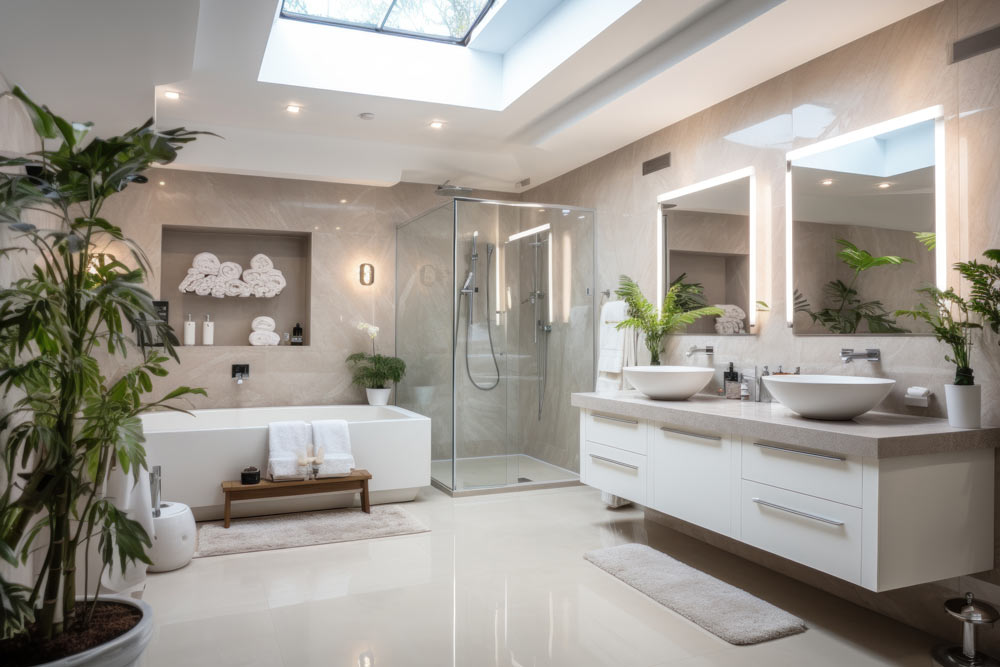
Bathroom Renovations can vary quite a bit in price, and that often surprises people. One project might feel fairly straightforward, while another of a similar size ends up costing noticeably more. The truth is, there isn’t a single fixed price because every bathroom is shaped by a mix of practical decisions, materials, and the condition of the existing space. Understanding what actually drives the cost helps you plan more confidently and avoid unnecessary shocks along the way.
Below, we break down the key factors that typically influence the overall cost of Bathroom Renovations, along with some insight into where money is usually well spent and where you might have a bit more flexibility.
1. Size and layout of the bathroom
One of the most obvious cost drivers is the size of the room. Larger bathrooms naturally require more materials such as tiles, flooring, plastering and paint. Labour time also increases, which can have a significant impact on the overall budget.
However, size alone doesn’t tell the full story. The layout plays just as important a role. A simple, rectangular bathroom is usually more cost-effective than a space with awkward angles, boxed-in pipework or structural limitations. The more complicated the layout, the more time is needed for preparation, adjustment and installation.
In some Bathroom Renovations, even a small space can become complex if walls need adjusting or plumbing has to be moved.
2. Plumbing changes and repositioning
Keeping plumbing in the same place is usually more cost-effective. Once you start moving toilets, showers or sinks, the cost begins to rise. This is because altering pipework often involves lifting floors, chasing walls and re-routing systems that were not originally designed for the new layout.
Sometimes these changes are necessary to improve functionality. For example, repositioning a bath to create better flow or converting a dated layout into a more open wetroom design can dramatically improve the end result. Still, it’s important to understand that plumbing changes tend to be one of the more labour-intensive parts of Bathroom Renovations.
3. Choice of materials and finishes
Material selection has a huge impact on cost. Tiles, for example, can range from budget-friendly ceramic options to premium natural stone. Similarly, bathroom suites, taps and shower systems come in a wide range of price points.
It’s not always about choosing the most expensive option. In fact, many well-designed bathrooms rely on carefully chosen mid-range products that balance durability, appearance and cost. However, premium finishes often come with improved longevity, better detailing and a more refined feel.
Tiles in particular can influence both the look and budget of Bathroom Renovations more than many people expect, especially when larger areas are involved.
4. Condition of the existing bathroom
What lies beneath the surface often matters more than what you can see. Older bathrooms may hide issues such as damp, uneven walls, outdated pipework or poor electrics. Fixing these problems isn’t always predictable at the outset, but they can significantly affect cost once work begins.
In many Bathroom Renovations, a large portion of the budget goes into preparation rather than visible finishes. While it may not feel exciting, this stage is essential to ensure the new bathroom is safe, durable and properly built.
Skipping or rushing preparation work can lead to problems later, so it’s usually worth addressing issues properly from the start.
5. Labour and installation complexity
Skilled labour is a major component of any bathroom project. The level of detail required during installation affects how long the job takes, and therefore the cost.
For example, a simple suite replacement will generally take less time than a full redesign involving structural adjustments, bespoke tiling patterns or complex wetroom installations. Precision work, such as aligning tiles or fitting large-format panels, can also increase labour time.
Good Bathroom Renovations tend to rely on careful, experienced workmanship rather than speed alone. While it may not always be the cheapest route, it often delivers a more reliable and visually consistent finish.
6. Electrical work and lighting
Modern bathrooms often include more electrical elements than older ones. This can include underfloor heating, LED lighting, extractor fans and illuminated mirrors. Each of these adds both material and installation costs.
Lighting design in particular can influence the overall feel of the space. Well-planned lighting can make a bathroom feel larger, warmer and more practical. However, integrating lighting safely within a wet environment requires qualified installation, which adds to the overall project cost.
It’s one of those areas where Bathroom Renovations benefit from proper planning rather than last-minute additions.
7. Design complexity and bespoke features
Simple bathrooms are usually more affordable to install, but bespoke features can quickly change the overall budget. Custom vanity units, feature tiling, recessed shelving or made-to-measure storage all require additional planning and craftsmanship.
These elements are often what make a bathroom feel truly personal, though they do come at a price. Even small design choices, such as herringbone tile layouts or niche shelving, can add extra labour time.
That said, well-planned design doesn’t always mean more expensive. In many Bathroom Renovations, thoughtful simplicity often delivers the strongest result.
8. Waste removal and preparation costs
Old bathrooms need to be stripped out before new work begins, and waste disposal is often overlooked when budgeting. Skips, removal time and site preparation all form part of the overall cost.
Protecting surrounding areas, managing dust and ensuring safe disposal of materials all take time and organisation. While not always the most visible part of the process, these steps are necessary for a smooth renovation.
9. Timescale and project coordination
Time can influence cost more than people realise. Longer projects naturally involve more labour days, but delays can also increase indirect costs, particularly if multiple trades are involved.
Efficient coordination helps keep Bathroom Renovations on track. When plumbing, tiling, electrics and finishing work are properly scheduled, the project tends to run more smoothly and predictably.
Final thoughts
The cost of Bathroom Renovations is shaped by a combination of practical decisions, material choices and the condition of the existing space. While it can be tempting to focus purely on price, the more useful approach is to think about value, durability and how the finished bathroom will actually be used day to day.
A well-planned renovation doesn’t necessarily need to be the most expensive, but it does benefit from clear decisions and careful execution. In most cases, the best results come from balancing design ambition with realistic expectations about what is involved behind the scenes.