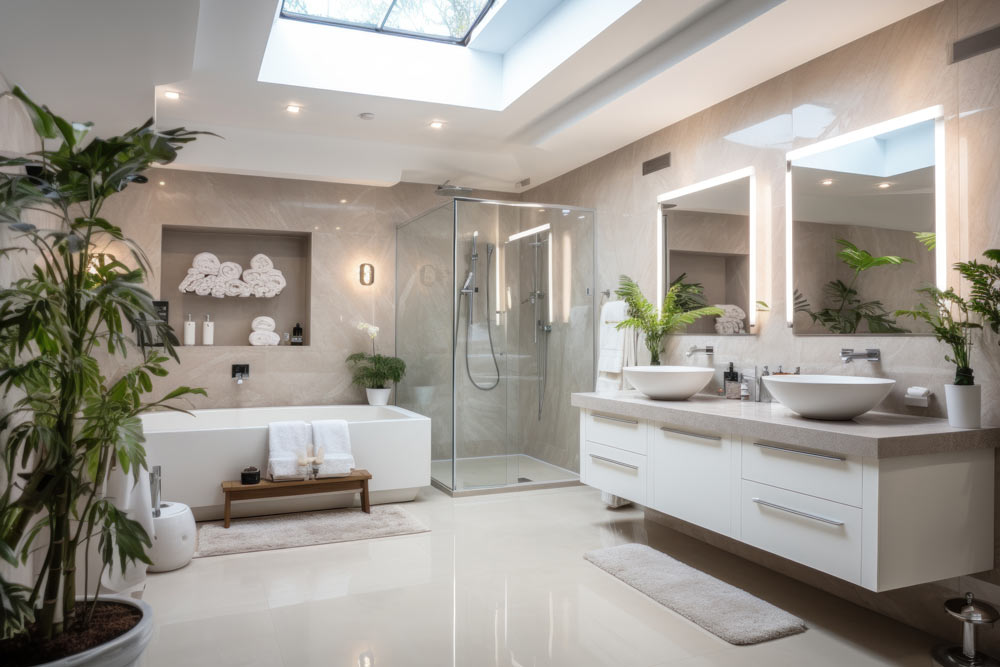

Bathroom Renovations often hinge on decisions that seem simple at first but carry more weight than expected. One of the biggest of these is selecting Bathroom Tiles. They influence not just the look of the room, but also how it feels, how it functions, and how easy it is to maintain over time.
With so many colours, textures and materials available, it is easy to feel overwhelmed. Some people focus purely on appearance, while others lean towards practicality. In reality, the best results usually come from balancing both. The right Bathroom Tiles should work visually, but also suit the way the space is used day to day.
This guide breaks down the key considerations to help you make a more confident choice.
Start with the size and shape of your bathroom
Before looking at patterns or colours, it helps to understand the space you are working with. Bathroom Tiles can significantly change how a room feels, especially when space is limited.
Larger tiles can make small bathrooms feel more open because there are fewer grout lines breaking up the surface. This creates a cleaner, more continuous look. On the other hand, smaller tiles can work well in awkward areas or where you want more grip, such as shower floors.
The shape of the room also matters. Long, narrow bathrooms may benefit from horizontal layouts that help widen the visual feel of the space. In contrast, square rooms often allow more flexibility with tile direction and pattern.
Good Bathroom Renovations usually begin by using tiles to enhance the proportions of the room, not fight against them.
Think about where the tiles will be used
Not all Bathroom Tiles need to perform the same job. Walls and floors have very different requirements, and choosing correctly can make a noticeable difference over time.
Floor tiles need to be durable and slip-resistant. Porcelain is often chosen in Bathroom Renovations because it is strong, water-resistant and relatively low maintenance. Wall tiles, meanwhile, can focus more on design and finish, since they are not subject to the same wear.
Shower areas are particularly important. These spaces need tiles that can handle constant moisture without staining or degrading. It is also worth considering grout lines, as they can affect both maintenance and appearance in wet areas.
Separating function from aesthetics at the planning stage helps avoid issues later on.
Colour choices and how they affect the space
Colour has a powerful effect in bathroom design. Light Bathroom Tiles tend to make a space feel larger and brighter, which can be useful in smaller or darker rooms. Whites, creams and soft greys remain popular because they are versatile and timeless.
Darker tones, however, can create a more dramatic or luxurious feel. They work particularly well in larger bathrooms or when paired with strong lighting. The key is balance. Too much dark tiling in a small space can make the room feel enclosed.
Neutral palettes often offer the most flexibility in Bathroom Renovations, especially if you prefer to change accessories or décor over time without retiling.
Texture and finish matter more than people expect
Tile finish is often overlooked, but it plays a subtle yet important role. Gloss Bathroom Tiles reflect light and can make a space feel brighter, but they may show water marks more easily. Matt finishes tend to be more understated and can feel more modern and natural.
Textured tiles can add depth and interest, particularly in feature areas such as shower walls or behind basins. However, they may require more effort to clean depending on the level of texture.
The best approach is usually a combination. Many Bathroom Renovations use a mix of finishes to create contrast without overwhelming the space.
Tile size and visual impact
Tile size can completely change the feel of a bathroom. Large-format Bathroom Tiles are increasingly popular because they create a smooth, minimal look with fewer grout lines. This can make cleaning easier and give a more contemporary appearance.
Smaller tiles, such as mosaics, are often used for feature areas or curved surfaces. They allow more flexibility in shaping and detailing, especially in showers or niche spaces.
The choice is not just aesthetic. Larger tiles can speed up installation, but they may require more precise preparation of walls and floors. Smaller tiles may take longer to install but can offer more design flexibility.
The role of grout in the final finish
Grout is often treated as a minor detail, but it has a big impact on the final look of Bathroom Tiles. Matching grout creates a seamless appearance, while contrasting grout can highlight the shape and pattern of the tiles.
From a practical point of view, darker grout can be more forgiving in high-use areas, as it tends to show less discolouration over time. Lighter grout, while visually clean, may require more maintenance.
In well-executed Bathroom Renovations, adhesive and grout is chosen with the same care as the tiles themselves rather than being an afterthought.
Natural stone vs porcelain tiles
One of the common decisions in Bathroom Tiles selection is whether to go for natural stone or porcelain alternatives.
Natural stone offers unique variation and a more organic feel. No two tiles are identical, which can create a highly individual look. However, it often requires sealing and more regular maintenance.
Porcelain tiles, by contrast, are manufactured for consistency and durability. They are generally easier to maintain and can convincingly replicate stone, wood or concrete effects.
For many Bathroom Renovations, porcelain provides a practical balance between appearance and performance, especially in busy households.
Matching tiles with the overall bathroom design
Tiles should not be chosen in isolation. They need to work alongside fixtures, lighting and furniture. A striking tile design may lose impact if it clashes with the rest of the room.
In some cases, simple Bathroom Tiles work best when paired with bold fixtures, while more decorative tiles may suit minimal fittings. It is often about balance rather than competition between elements.
Thinking about the overall mood of the bathroom helps guide these decisions. Whether the aim is calm and neutral or bold and expressive, consistency across materials is key.
Maintenance and long-term practicality
It is easy to focus on appearance during Bathroom Renovations, but maintenance is equally important. Some Bathroom Tiles are easier to clean and maintain than others.
Smooth, non-porous surfaces are generally more practical for everyday use. Heavily textured tiles or intricate grout patterns may require more attention over time.
Considering how much maintenance you are willing to commit to can help narrow down choices early on. A beautiful bathroom should remain practical long after installation.
Final thoughts
Choosing Bathroom Tiles is not just a design decision, it is a long-term investment in how your bathroom looks and functions. The best results come from balancing style, durability and practicality, rather than focusing on any single factor.
When planned carefully, tiles can transform a bathroom from a purely functional space into something far more considered and enjoyable to use. Taking the time to explore options properly during Bathroom Renovations often leads to a finish that feels more natural, cohesive and suited to everyday life.